

The Valencian School of Guitar Making

Between Craft and Production
The history of the Spanish guitar is often told through the surnames of individual great makers. Valencia requires us to look at it differently.
Here, the transition from a small workshop to larger-scale production — and later back toward family-run craft businesses — is particularly visible. For the history of the guitar, this matters: increasing production did not necessarily mean the disappearance of craftsmanship, and the word “factory” in the Spanish context could still involve a significant amount of skilled handwork.
The Valencian tradition is therefore difficult to define through a single maker or a single type of construction. Its most distinctive feature is instead the scale and diversity of production models.
Valencia: An Underestimated Centre
Research into the history of the Spanish guitar has long given Madrid, Barcelona and Andalusia far more attention.
Yet Valencia and its surroundings had a long-standing tradition of producing stringed instruments. Researcher and guitar maker Tobias Braun, who studied Valencian guitars, specifically noted that the city’s importance in the history of Spanish guitar making was for a long time far less thoroughly documented than that of other centres.
One of the clearest examples of the scale of this environment is the work of Salvador Ibáñez.
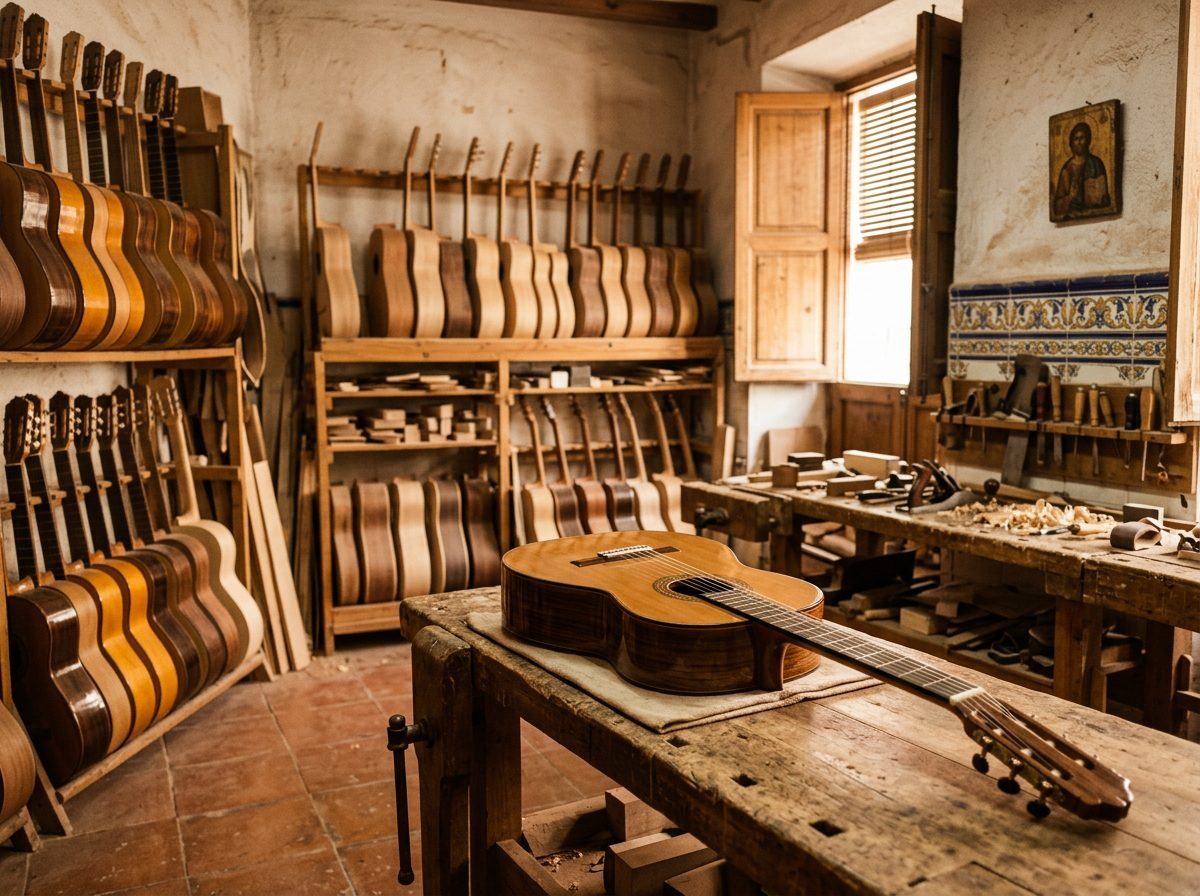
Salvador Ibáñez: When a Workshop Becomes Production
Salvador Ibáñez was born in Valencia in the mid-nineteenth century and began learning the craft as a child.
A surviving Ibáñez instrument is held, for example, in the collection of the José Benlliure House Museum. Its internal label identifies the Valencian company Salvador Ibáñez. The museum notes the high quality of the workmanship of his instruments.
But the development of the workshop itself is even more interesting than any single guitar.
Ibáñez’s production gradually grew far beyond the scale of a small craft workshop. The company made guitars, bandurrias, lutes and other plucked string instruments, including for export markets.
In Valencia, the boundary between guitar maker and manufacturer becomes particularly visible — and proves much less clear than one might expect.
Why a Factory Guitar Is Also Part of Heritage
For collectors, the word “factory” can sometimes sound like the opposite of “maker.”
Historically, however, the situation was far more complex. Increased production allowed Spanish instruments to reach new markets, while the companies themselves often continued to employ specialists trained in traditional craft processes.
The Valencian model therefore matters not only for the history of elite concert guitars. It also helps explain how the Spanish guitar became an international mass-market instrument.
After the Ibáñez company ceased operating, parts of its equipment and some of its specialists became connected with other Valencian manufacturers, allowing production experience to continue to circulate.
Telesforo Julve and the Continuation of Industrial Production
One of the prominent representatives of the next period was Telesforo Julve.
His company operated in Valencia during the first half of the twentieth century and produced a large number of instruments, many of them intended for foreign markets.
Training again took place within production environments: makers and workers gained experience in larger enterprises, and some later opened workshops of their own.
The Valencian tradition therefore developed not only through family dynasties, but also through the movement of specialists between manufacturers.
From Mass-Market Instruments Back to the Family Workshop
The second half of the twentieth century reveals another side of Valencia.
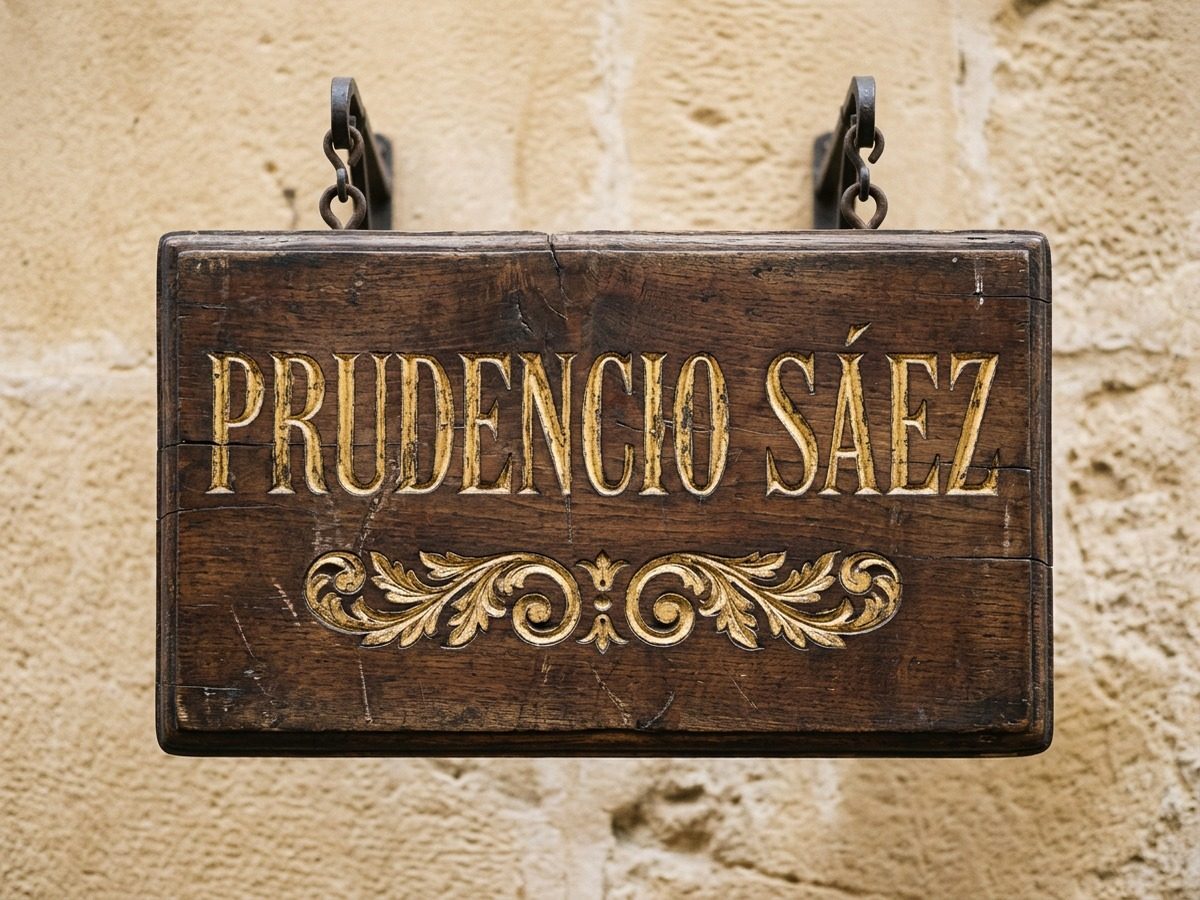
In 1963, Prudencio Sáez Armengol, who had previously worked for other guitar makers, began working independently. His business gradually developed into a family workshop producing instruments at different levels, from student guitars to concert models. Today, the tradition continues through the third generation of the family.
This example helps explain why the opposition between “craft” and “production” works poorly in the Valencian context.
The same workshop can produce relatively accessible instruments while also making more elaborate concert guitars.
Prudencio Sáez and the Guitar Heritage Catalogue
For Guitar Heritage, this line has direct relevance: the catalogue includes guitars by Prudencio Sáez in several models.
A model number alone, however, does not automatically tell the story of a particular instrument.
Models 4, 37, 50 or 270 may belong to specific market segments or catalogue periods, but accurate dating still requires examination of the label, construction and documented information.
Prudencio Sáez can therefore safely be cited in an article on the Valencian tradition as an example of modern regional continuity, while the history of a particular guitar must remain separate from the general history of the manufacturer.
Is There a Valencian Style?
It is almost impossible to define a single construction formula for the Valencian school.
Salvador Ibáñez worked in a completely different economic and musical environment from workshops of the second half of the twentieth century. Their scales of production also differed enormously.
Yet this diversity is precisely what characterises the region.
Valencia demonstrates how traditional guitar making can exist in several forms at once:
the small workshop, the family business, the large company, the export factory and the modern concert-guitar workshop.
Why This Matters Today
For collectors, a Valencian guitar raises a particularly interesting question: what exactly does the name on the label mean?
On an individually made instrument, it may identify the maker directly. On a guitar produced by a larger company, it may instead represent the firm within which numerous specialists worked.
That does not make such an instrument less interesting. On the contrary, it tells a different story: the story of how the Spanish guitar moved beyond the individual workshop and became part of international musical trade.
For that reason, the Valencian school is best understood not only through the names of important makers, but also through the organisation of production itself.
This reveals another side of guitar heritage: an instrument may be the result of one person’s individual style — or it may be the product of the craft culture of an entire enterprise.